How MusicMaster Help Shape the Professional Sound of LTATM Radio
I want to thank Jerry Butler for his help in writing this week’s blog post reviewing a creative company, and to acknowledge the entire MusicMaster team for their patient instruction and support in helping me better understand music scheduling.
When I placed Let’s Talk About The Music on hold to focus on my personal life and the reason I returned to college, I was also taking on one of the biggest responsibilities of my LTATM journey: building a professional radio station for independent musicians worldwide.
While attending Green River College, I took a course called Radio Business with Tom Evan Krause. In this class, I learned how a radio station operates using professional tools, including music scheduling software.
As part of that process, I explored different systems and spoke with both Gen-Nex (with GSelector) and MusicMaster, with guidance from my professor. In the end, I chose to work with MusicMaster. Why? Their customer service stood out—especially Jerry Butler, who was incredibly helpful and understood that I was learning as a student. The entire company provided strong support, which made a big difference as I was building my skills from the ground up.
MusicMaster is also used by professional radio stations, including Audacy’s KISW, where I was able to gain some insight from Ryan Castle during COVID. That connection helped reinforce that I was learning a tool used in real-world radio environments.
MusicMaster can refer to two different things, depending on the context. The most relevant to this blog is MusicMaster scheduling software, a professional tool used by broadcasters to organize and schedule music. It is designed to help create balanced, competitive playlists and is widely used in radio, television, and online streaming. Known for its flexibility and scalability, MusicMaster allows programmers to build structured rotations and maintain a consistent listening experience.
There is also the Fender Musicmaster, a solid-body electric guitar originally introduced in 1956 as a student model. While it shares the same name, it serves a completely different purpose in the world of music. For this blog, I will be focusing on MusicMaster as a scheduling system and how it shaped my understanding of radio programming.
After working with MusicMaster and speaking with their team, I gained a deeper understanding of how the system works and why it’s used across the industry. In simple terms, it is a tool that helps broadcasters create a well-balanced and competitive mix of content. What stood out to me is how widely it is used—from student stations to major broadcast networks, across radio, streaming platforms, and even music television.
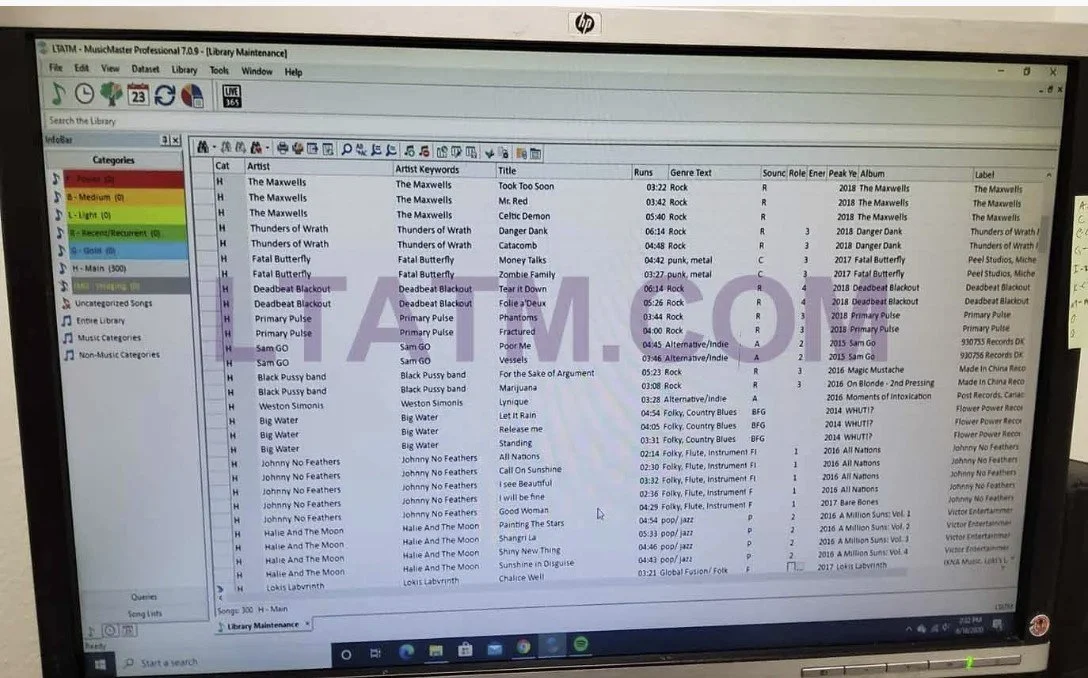
LTATM Radio Scheduling with MusicMater
My goal was to build a professional network radio station for independent musicians. I felt they deserved a thoughtfully crafted, professional broadcast platform because their talent and creativity are truly outstanding.
One of the biggest differences between MusicMaster and other systems is how flexible and intuitive it is. Instead of forcing you into a rigid structure, it allows you to build your music library and scheduling system in a way that makes sense for your format. From my experience, this made it easier to understand once I got past the initial learning curve.
When it comes to music rotation, I learned that MusicMaster goes beyond simple “pass or fail” rules. It uses more advanced tools, like scalable rules and optimization goals, to help find the best possible song for each moment. This allows programmers to shape the overall sound of a station, rather than just filling time slots.
Another thing that stood out is how the system balances consistency with flexibility. Each station can customize how detailed their music database is. For example, a Top 40 station might use fewer data fields, while a classical station might require much more detailed information. This means the system can adapt to different styles, formats, and programming needs.
Because the system is scalable, it can support both small projects and large operations, from independent web streams to large broadcast networks.
From a learning perspective, this was one of the most valuable tools I worked with. The MusicMaster team explained that even students with no prior radio experience can learn the basics—such as adding songs, scheduling, and exporting logs—relatively quickly. From my own experience, I can say that while it takes time to fully understand, it builds a strong foundation in how radio programming actually works.
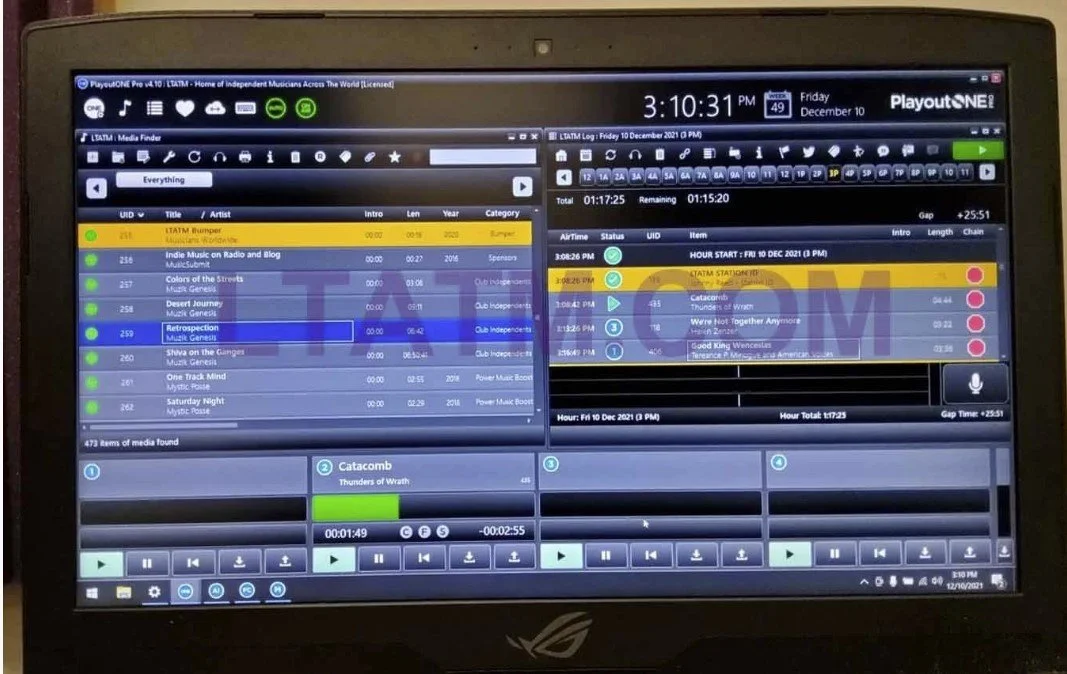
LTATM Radio + Live365 + MM+ Playoutone = Professional
Building LTATM Radio was hands-down the standout achievement of my educational career, a project that truly defined my growth.
One of the biggest takeaways for me is that the skills learned from using MusicMaster are transferable. Many employers in radio and broadcasting look for experience with music scheduling systems, and learning this tool can help open the door to future opportunities in the industry.
Working with Jerry Butler and the entire MusicMaster team was an incredible experience. Their support made a lasting impact on my journey, especially as I was learning and building something from the ground up.
My goal was always to create a professional radio station dedicated to independent musicians and their music. While I had big ambitions for what LTATM Radio could become, the experience itself remains one of the greatest achievements of my LTATM journey. It showed me what is possible—and what it truly takes to bring a vision like this to life.
Not everything came together the way I originally hoped, but the experience itself remains one of the most important parts of my journey. It showed me what it really takes to build something from the ground up—and that’s something no one can take away.
If you’re looking to build a professional radio station or learn how music scheduling works at an industry level, I highly recommend working with MusicMaster. Their system, combined with strong support, makes it a valuable tool for both students and professionals.