I enrolled at Green River College with one goal in mind—to learn how to build Let's Talk About The Music (LTATM) into a successful multimedia platform. KGRG-FM became the foundation of that journey, introducing me to much more than radio broadcasting. Through hands-on experience in station operations, programming, leadership, and the business side of the music industry, I gained a deeper understanding of how a media organization is built, managed, and sustained.
Radio & Media
From managing programming schedules to collaborating with staff and producing content, I developed a strong foundation in communication, teamwork, media production, and strategic planning. Those experiences continue to influence everything I create today, from podcasting and multimedia production to graphic design, digital marketing, and community storytelling through Let's Talk About The Music (LTATM) and my personal creative brand.
The mission of this page is to focus on my experience building LTATM Radio and what I learned throughout that journey, as I worked toward becoming part of the radio industry.
Through this process, I gained a deeper understanding of how a radio station operates behind the scenes. I’ve broken this experience down into key areas:
Radio Programming
The Face of a Radio Station
Music Scheduling
Core Job Roles within a Station
Before building LTATM Radio professionally, I didn’t fully understand how much goes into keeping a station running. This experience changed that completely.
Radio Station Structure & Roles
Building a functional, successful radio station isn’t a solo act—it takes a well-structured team working in harmony across five essential departments:
General Management (GM)
Program Director (PD)
Human Resources (HR)
Sales & Marketing
IT & Technical Support
Of these, the Program Director plays one of the most critical roles. The PD runs the heartbeat of the station—managing everything from the music scheduler and radio personalities to podcast lineups, contest planning, and station branding. It’s a role that requires both creative vision and strong organizational skills.
Radio Programming
Radio programming is one of the most important parts of a radio station and falls under the responsibilities of the Program Director (PD). The PD oversees multiple areas that keep the station running smoothly and consistently.
These areas include:
Air Talent
News, Sports, and Public Affairs
Podcasters and Digital Content Creators
Promotions (contests and giveaways)
Music Department
Community Relations
Traffic Department
Production & Imaging / Creative
Research and Documentation
Special Programming and Events
Social Media and Digital Platforms
The Program Director also works closely with upper management, supports and collaborates with the sales department, and coordinates with engineers, technical teams, and IT. In addition, the PD ensures the station follows FCC policies and regulations.
Program Elements:
A well-structured radio station is built on consistent programming elements that create a complete listening experience. These include:
Music
News
Traffic and Weather
Sports
Talk Segments
General Announcements (GA)
Underwriting Announcements (UA)
Public Service Announcements (PSA)
Station Promos (KAs)
Sweepers / Bumpers
Legal IDs
Special Programming and Public Affairs
Radio Interface (The “Face” of a Radio Station):
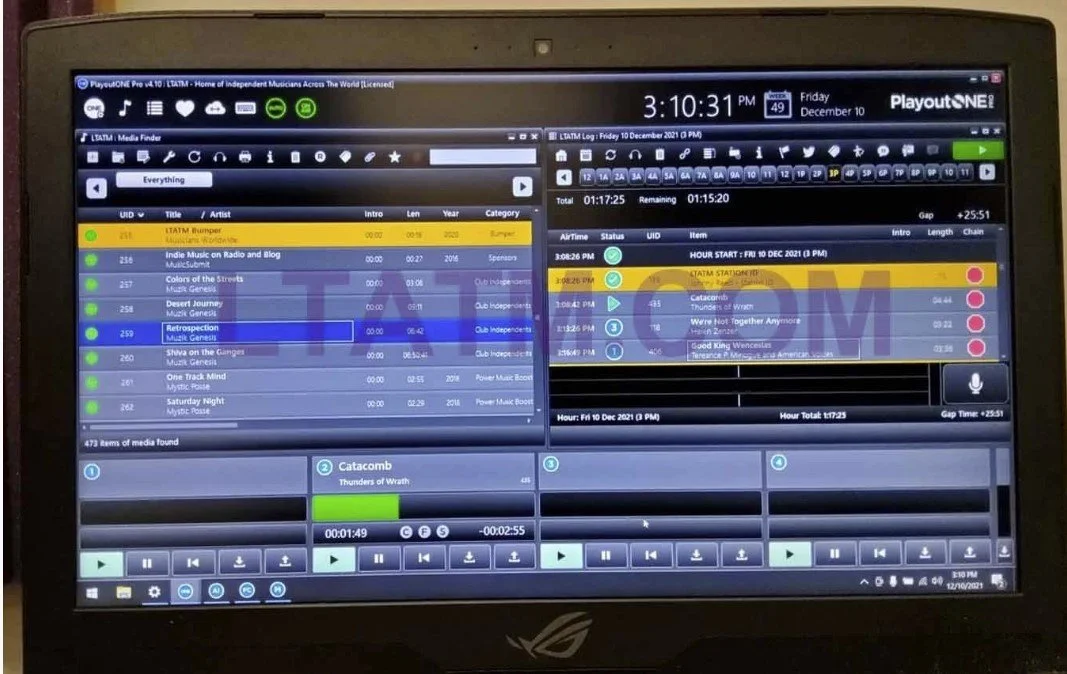
As I continued building LTATM Radio, I needed to find the right radio interface—the “face” of the station that listeners experience. I researched several industry systems, including:
PlayoutONE (Aiir)
Myriad 5 Playout
NextKast
I also returned to Live365, which has a built-in music scheduler. However, I chose to focus on learning MusicMaster for scheduling while exploring interfaces like NextKast and PlayoutONE for automation and playback.
I began working with NextKast, but the system eventually became unstable. My goal was to transition into using PlayoutONE, and I was able to begin working with it. However, at that time, I was facing financial limitations that made it difficult to keep the system running.
Music Scheduler and Experience:
LTATM Radio started out using Spreaker for radio programming, then moved to Live365, and later switched to SAM Broadcaster. As I began focusing more on professionalism, I started researching industry-level systems such as Gen-Nex, NextKast, SAM Broadcaster Cloud, PlayoutONE (Aiir), and WideOrbit.
As part of my learning process, I researched and spoke with companies like MusicMaster, WideOrbit, and Gen-Nex, as they are well known in the radio industry. Gen-Nex was used by KGRG, while KGRG1 used Audio Vault. Before both stations went off the air, they transitioned to Zetta.
Gen-Nex and WideOrbit were both impressive systems to learn about, but they did not fit the budget I needed while I was still learning. Since I was already gaining experience with Audio Vault and Gen-Nex at KGRG, I decided to focus on MusicMaster.
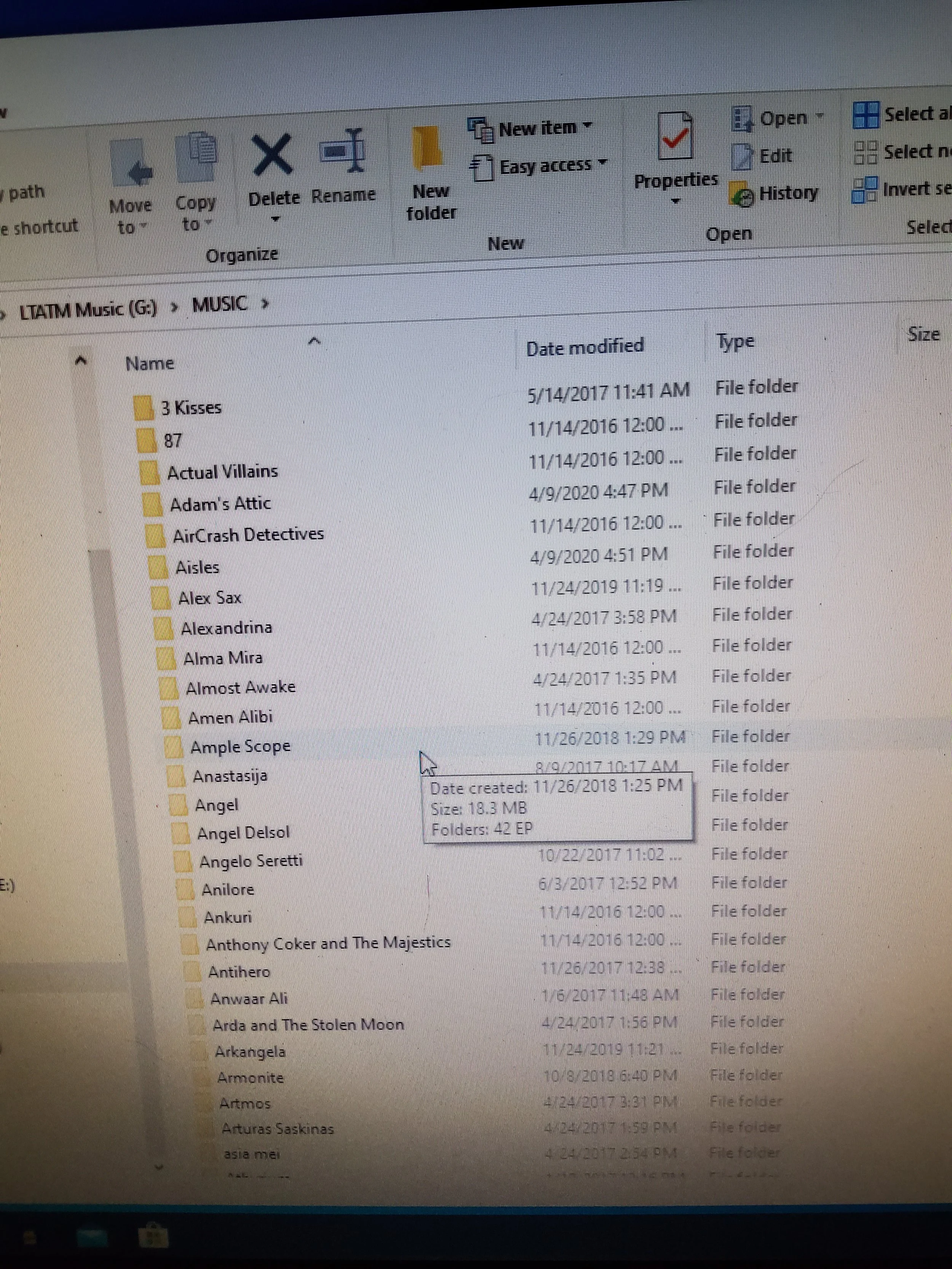
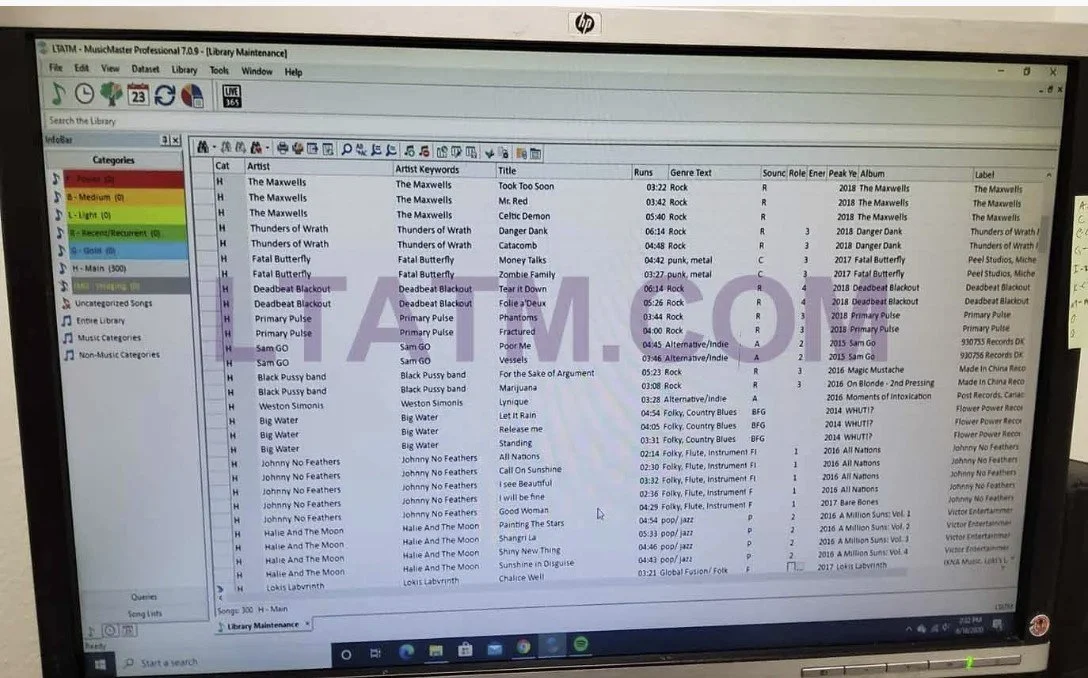
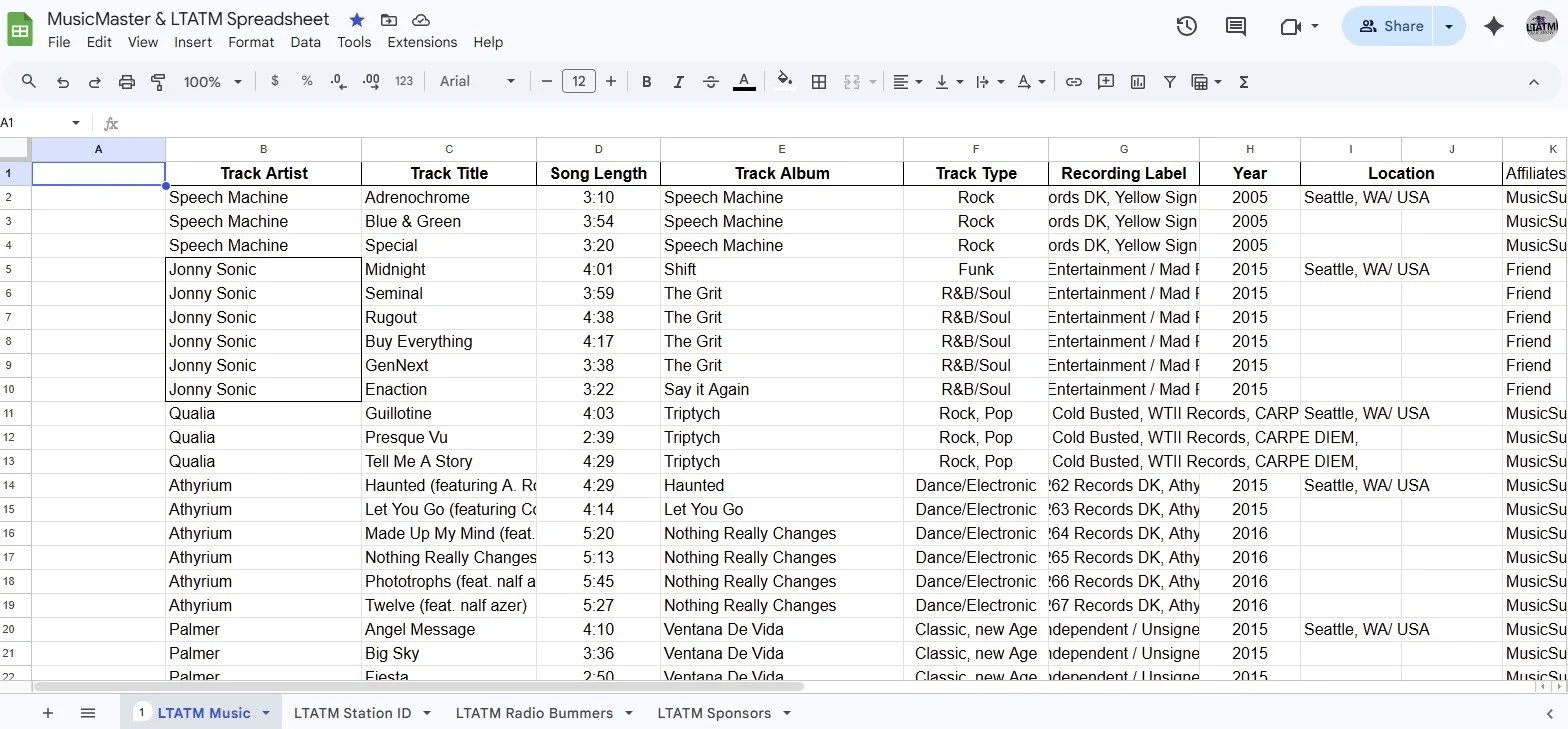
MusicMaster turned out to be an excellent system for learning how professional radio scheduling works. Before this, the way I scheduled LTATM Radio was completely incorrect, and I had to rebuild everything from the ground up. I learned how to properly categorize music, organize artists, and apply attributes such as mood and rotation to create a balanced and structured playlist.
I started working with MusicMaster during COVID. While the world felt like it had frozen, I focused on building LTATM Radio and learning how professional radio scheduling works through MusicMaster.
Music Rotation:
One of the biggest things I learned while working with MusicMaster was music rotation. Before learning proper scheduling, I didn’t fully understand how important rotation is to a radio station.
Music rotation controls how often songs are played and how they are spaced out over time. It helps create balance, so listeners don’t hear the same songs too often, while still keeping familiar tracks in regular play.
I learned how to organize songs into categories, such as heavy rotation, medium rotation, and light rotation, along with tagging music by mood, genre, and artist separation. This helped create a more structured and professional sound for LTATM Radio.
Through this process, I gained a better understanding of how programming decisions impact the overall listening experience.
To program a full day (24 hours), it can take anywhere from 288 to over 1,200 songs, depending on how the station is structured. This is typically broken down into an average of 12 songs per hour. It is important to over-program content to avoid dead air and maintain a consistent flow.
Between songs, additional elements are scheduled to create a complete broadcast experience. These include bumpers, station IDs (played at the top of the hour), public service announcements (PSAs), general announcements (GAs), and station promotions.
Music categories are structured to maintain variety and listener engagement. These may include:
HOT (current hits)
New (new music)
Middle (songs no longer in heavy rotation)
Gold (older tracks)
Example: One Hour Programming Flow:
This structure is often referred to as a programming clock, where music and station elements are scheduled in a repeating pattern to maintain consistency.
A typical radio hour follows a structured flow that balances music rotation with station elements to maintain consistency and listener engagement.
Top of Hour
Station ID
Music Block
A mix of rotating categories (HOT, New, Middle, Gold)
Break
General Announcements (GA)
Station Promo
Public Service Announcement (PSA)
Music Block
Continued rotation of music categories
Break
GA / Promo / PSA
Music Block
Continued programming
End of Hour
Station ID (reset for next hour)
When special programming occurs, such as a live event, regular music rotation may be paused. However, essential elements like PSAs, GAs, underwriting announcements (UA), and station IDs must still be maintained to meet broadcasting standards.
Project Reflection:
At the same time, I was dealing with external challenges, which led me to step away from LTATM Radio and refocus on Let’s Talk About The Music, LLC.
Even so, building LTATM Radio remains one of the greatest achievements of my life. I successfully built a functioning radio station while investing over $8,000 and dedicating six years to learning radio broadcasting and the business behind it.
If given the opportunity to rebuild it, I would do so in a heartbeat—but not alone. Building a radio station is a large-scale project that requires a committed and collaborative team. I had a larger vision for LTATM Radio and planned to continue developing it further. While it was not fully realized at the time, the experience reinforced how important a strong, dedicated team is when building a project at this scale.
Personal Experience:
LTATM Radio wouldn’t have been possible without the support and encouragement I received along the way, including recommendation letters from individuals who believed in the vision and helped keep it moving forward.
Through this experience, I learned that building a radio station is not just about playing music—it’s about structure, teamwork, leadership, and understanding how each role contributes to the bigger picture.