Drawing the World: How Current Events Shape Our Artistic Perspective
I was thinking about how I wanted to write this blog this week using current events that are going on and how it shapes the artistic look at life. A news article popped up, and it inspired this blog. There are thousands of editorial cartoons and political comics out there. Some people go out to vote, protest, or post their voice about what is going on in the world. But as an artist? We draw it.
Art in Action: Interpreting Current Events
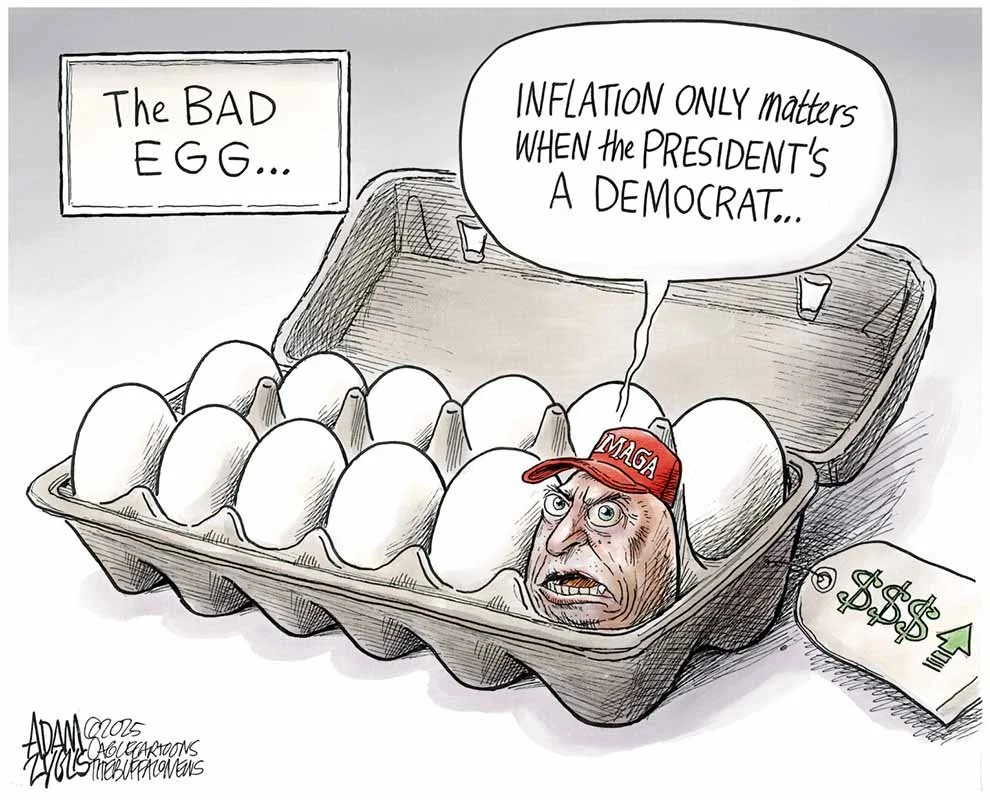
The Bad Egg
As an artist, sometimes it is hard to express our frustration with how the world is going through our eyes. As an example, there is one called “The Bad Egg…” showing Trump in an egg carton, stating that only Democrats are responsible for inflation.
Credit: Cartoon by Adam Zyglis,
The Buffalo News
Each week, new editorial cartoons and political comics emerge, offering a glimpse into how artists see and respond to the world around them.
Through humor, symbolism, and exaggeration, they turn real-world events into powerful visual stories.
A Different Perspective Through Art
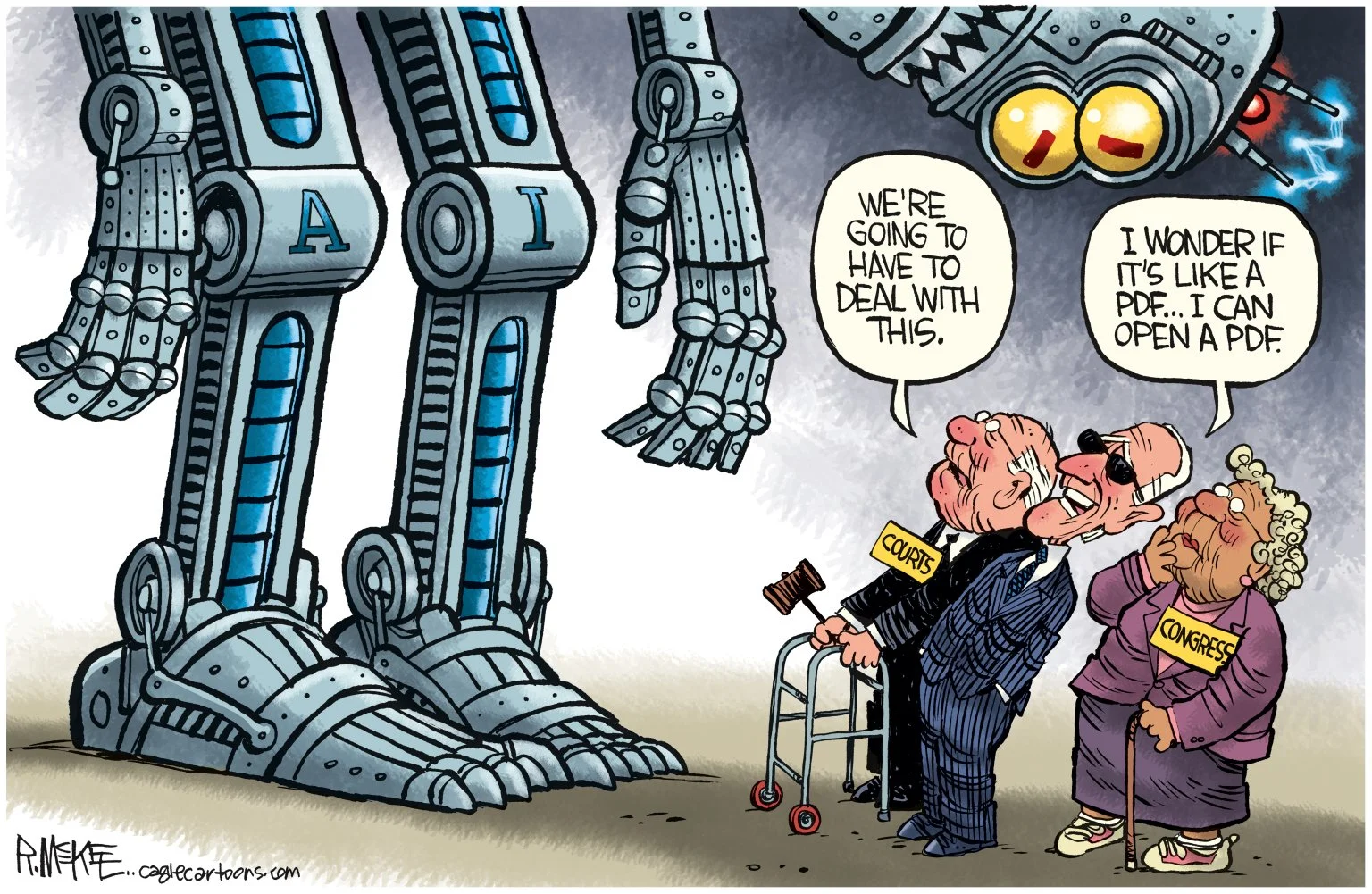
Cagle Cartoons
Here is another example focusing on issues of AI. It shows courts and Congress holding onto old ways of thinking while the world continues to move forward. AI is here to stay, even as those older perspectives begin to become history.
Credit: Cartoon by Rick McKee, via Cagle Cartoons
The History of Editorial Cartoons
Since then, political cartoons have been used for over 200 years to express opinions on major issues and reflect what is happening in the world.
Through exaggeration, symbolism, and wit, artists have turned complex topics into visual stories that can spark thought, emotion, and conversation in a single frame.
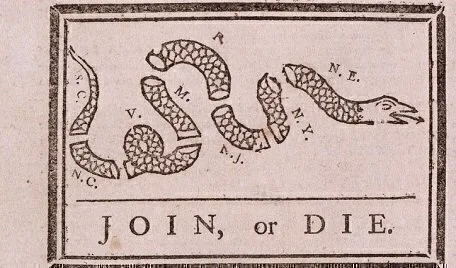
Benjamin Franklin in 1754
Editorial cartoons and political comics have a long history rooted in satirical art, long before modern journalism. One of the earliest examples was created by Benjamin Franklin in 1754, using a cartoon to send a message about unity during a time of conflict.
Today is Still Matters
They began as satirical artwork in the 18th century and have continued to evolve, using humor, symbolism, and exaggeration to help people understand complex ideas.
As artists, we don’t just see what is happening—we interpret it. Current events shape how we think, feel, and create. Maybe that’s what makes art so powerful. It doesn’t just reflect the world—it gives people another way to understand it.
It becomes our voice—drawn, designed, and brought to life in ways words sometimes can’t express.